Categories
dance events

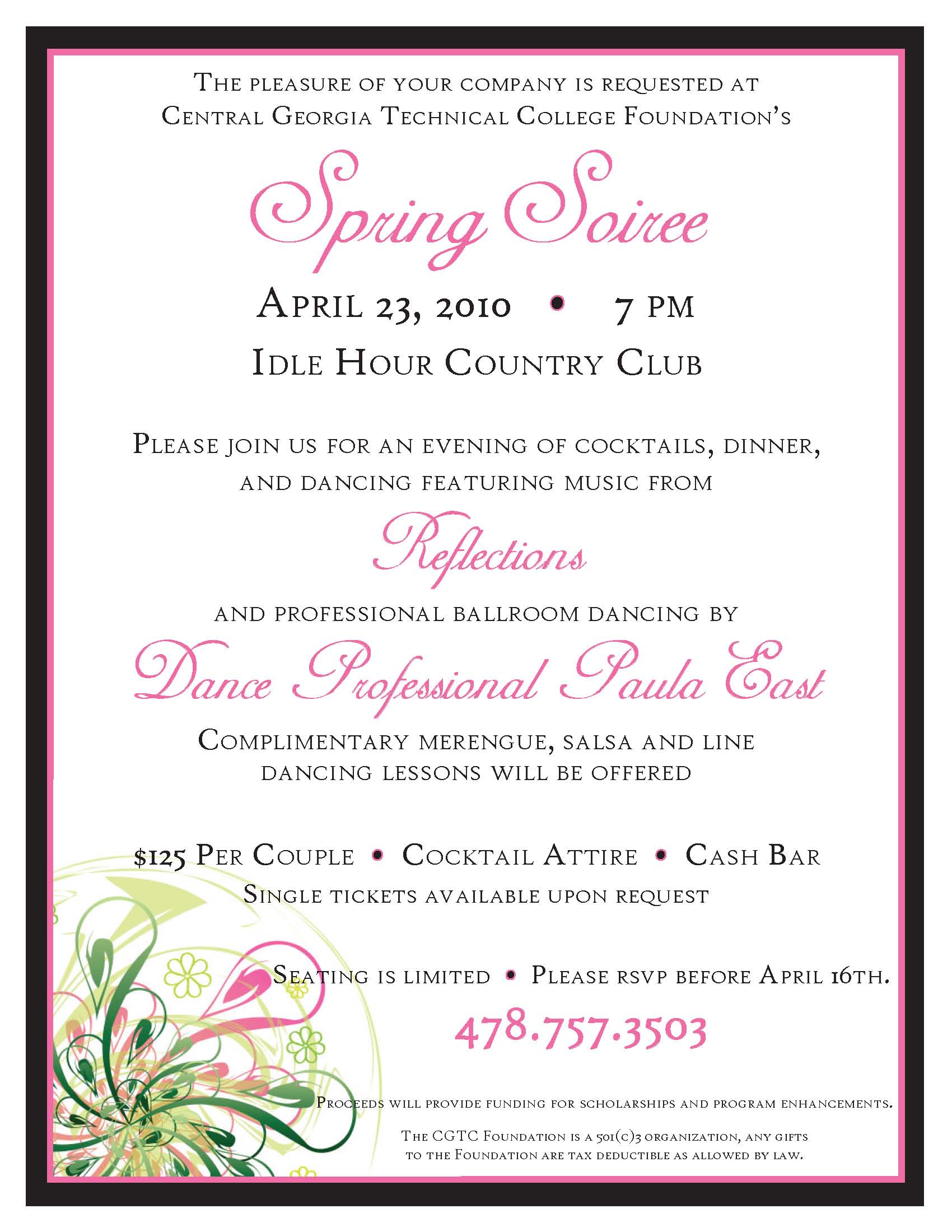
Coming soon: Spring Soirée!

Daniel and I will be at this event along with Paula and some other people from our group.  We’ll be helping teach some informal lessons and get the dancing going.  It should be a great evening; the ticket price includes a seated dinner with steak and salmon as well as live music in a gorgeous venue–the Idle Hour Country Club.

Spring Soiree Flyer
Spring Soiree Flyer

Paula has tickets available; you can reach her at paulaeastdance@yahoo.com or just call the number on the flyer to buy a ticket.  I’m excited about this event; it’s our first time working with the CGTC Foundation.

Categories
dance events social dancing

Cherry Blossom Ball 2010

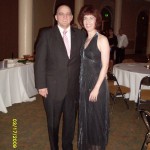
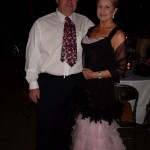
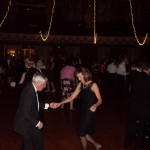
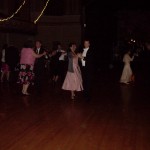
Last night’s Cherry Blossom Festival Diamond Ball was even more lovely than expected. I always forget how pretty the Macon City Auditorium is and how nice it is to see everyone in black tie. Of course, the snacks from Satterfield’s, Janeane’s, and Nu-Way don’t hurt, either! Everyone looked gorgeous and the bands–Celebration and the Georgia Big Band–were excellent for dancing. Here are some highlights.  Click the thumbnails to see the full-sized pictures.

Categories
dance events social dancing USA Dance

Backward & Forward

Looking backward, last night’s USA Dance monthly social was big fun.  Excited as always to see some new faces.  Our chapter is hoping to grow to 100 members this year–if last night was any indication, I bet we’ll get there.

Looking forward, next Friday is this year’s Cherry Blossom Ball!  It’s one of my favorite dance events of the year.  First, I love a black-tie do at any time, for any reason.  Second, it’s held at the Macon City Auditorium, which is such a pretty venue.  Third, I found out last night that the Georgia Big Band is playing.  They are always fun to dance to.  As a bonus, this year’s event is being called the “Diamond Ball” because a local jewelry store is donating a one-carat diamond which someone at the ball will win.  I’m not saying I expect to win–in fact, I hadn’t really thought about it–but if I did, I know exactly what I’d do with that diamond…

Flashy prizes aside, the real fun of an event like this is that it feels like a reward for the hard work and discipline of going to lessons and practicing every week.  Elegance, grace, beauty, and romance are the qualities that draw people to ballroom dancing.  Dancing to a live band in a gorgeous auditorium while wearing the perfect dress or tuxedo embodies all those qualities.

Plus there are always a lot of desserts and you might win a diamond! (^_^)  Buy tickets here or call (478) 301-5470.

Categories
lessons

Relevant Statistics

From our overnight trip to Atlanta on Wednesday/Thursday…

  • Miles driven in teeming rain: approximately 90 (to ATL on Wednesday)
  • Miles driven sans teeming rain, thank God: another 90 (back home on Thursday)
  • Lessons with Eddie: 4 (2 per day)
  • Routines learned: 2 (tango, foxtrot)
  • Total wine expenditure: $20 (for only 2 glasses–“thanks,” California Pizza Kitchen)
  • Mistakes in our breakfast order at Waffle House: 3
  • Future lessons scheduled: 6 (w00t w00t!)

Despite being mistreated at every restaurant we stepped into (except you, Zesto. We still love you), it was a great trip.  Eddie even managed to get me excited about the foxtrot by putting together a fun, jazzy routine.  And he let me step on his foot every time I did that one move in the tango, and never complained.

I asked him to clarify–again–whether the steps he’s putting into these routines would be okay to do at Silver level, and he explained the things we’d have to change to make them “legal”: taking out a couple of “exhibition” moves (a backbend, a tour jeté, and something that he called a half-drop, I think) and making all the free spins into underarm turns.  Seems easy enough.  We just need to practice, practice, practice to get these routines down.  By the end of our last lesson yesterday, I could hardly remember anything.  Fortunately we have it all on video.

Categories
social dancing USA Dance

We can also walk and chew gum simultaneously.

How hard is it to count to 4 while walking in a circle?  Just ask everyone who learned a new line dance from Dianne Kent at our USA Dance chapter’s Valentine’s Day dance last month:

A lot of ballroom dancers who consider themselves “serious” won’t go anywhere near a line dance.  We are serious about ballroom but don’t believe in taking dancing, or ourselves, too seriously!

Categories
behind the curtain

Jumpstart into Ballroom–from Paula East

I seem to be on an “advice for beginners” roll this week, maybe because I am always interested in sucking new people into the ballroom world.  Especially when those people are my friends. Extra-especially when they’ve been saying for years that they plan to start lessons, RIMA. (and also CRYSTAL.)

Our friend & instructor Paula East recently sent me a few thoughts about leading and how to approach a new partner:

“How many times have I heard a lady dancer complain about a male dancer with whom she just finished dancing their first dance together.  ‘I had no idea what he wanted me to do.  He just started doing all those crazy moves.’

“Gentlemen, believe me, the secret is to keep things simple until you know what the lady can do.  If she does not follow a step you are trying to lead, it is for two reasons.  Either you don’t know how to lead it or it was beyond her level and she couldn’t follow it.  In either case you are to blame.

“One more point, I may observe a couple dancing intricate and advanced steps together and because of this I may put her into a higher category of dancing.  Looking good with a regular partner is not always an indicator of how good a leader the gentleman dancer is.  Those two dancers know each other so well that they are not really leading and following any longer but are executing a personal routine.  I would still use the same procedure outlined above if I were ever to dance with her for the first time.

“The bottom line is always: Make your first dance a pleasant experience for both and other dances are likely to follow.”

I can attest that Paula’s advice is correct.  With Daniel, I can pull off some complex moves because we dance together so much that I know his lead extremely well.  With someone new it’s a lot easier to get lost.  So, guys: resist the temptation to show off with unknown ladies!

Categories
behind the curtain

Let’s talk about shoes

I love to talk about shoes!

Wearing ballroom shoes rather than street shoes really does make a difference.  Ballroom shoes are purpose-built for dancing, so they are easier to move around in.  They help you do the rise & fall in waltz or roll through your feet in rumba, for example.  The suede soles give the perfect amount of grip on the floor–not totally slippery but not sticky either.  Women’s ballroom shoes have well positioned heels that are easier to balance on and help with heel turns in the dances that use heel turns.  They are also soft enough to allow you to point your feet.  Men’s ballroom shoes are lighter, trimmer, and more flexible than street shoes.

Serious dancers have different shoes for different dances.  Daniel and I each have 2 pair: one for Smooth (waltz, tango, foxtrot) and one for Rhythm* (cha-cha, rumba, swing).  Smooth shoes for women have a closed toe while Rhythm shoes are sandals.  Smooth shoes for men look like jazz oxfords; men’s Rhythm shoes have a Cuban heel.  I think that if you only buy one pair, men should buy Smooth shoes and women should buy Rhythm shoes.

Those are the plain facts.  Now for the deep, dark secrets of shoe-buying:

  • Women dancers wear their Rhythm sandals really short–you want your toes to hang off the end a little bit so you can feel the floor as you dance.  This feels weird at first; then you get used to it, and wearing them the “normal” length feels weird.  My Rhythm shoes are an English size 5, which is like an American 7.  I wear an 8 or 8 1/2 street shoe.
  • Dancing with men who aren’t wearing proper dance shoes makes me nervous.  A lot of men’s shoes have that extra ridge of hard sole around the outside.  It’s easy to bump exposed toes with that part of the shoe–I’ve had the broken toenails to prove it.
  • As you probably guessed from the above, dancers check out each other’s feet and figure out who the dedicated ballroom types are by spotting who is wearing ballroom shoes.
  • Suede soles can’t be worn outdoors without damaging them.  That means carrying your shoes in a bag when you go to an event.  You might feel silly walking into a black tie charity ball with a shoe bag, but it’s worth it.  Plus, if you go in sneakers, you get the enjoyment of putting your sneakers back on after a good long evening of dancing.

Not wanting to give anyone free advertising unless they want to give me a shoe sponsorship, I haven’t mentioned any brand names or models in this post.  But if you are curious about what shoes to buy, email me and I’ll be happy to give some recommendations.  Good shoes for social dancing are available for around $60.  Worth every penny, as far as I’m concerned.

Stay tuned for explanation of “Smooth” and “Rhythm” and related terms.

Categories
Uncategorized

Two left feet?

It happens all the time when I meet new people.  They find out that we are ballroom dancers, and they say something like this: “I would love to dance, but I’ve got two left feet!”  A popular variation is “My wife wants us to learn to dance, but I’ve got two left feet!”

These people seem to think that the ability to dance comes from innate talent rather than from instruction, practice, and experience.  Yes, at a more advanced level, or in competitive dancing, talent is a factor.  But no one, no matter how talented, walks onto the floor for the first time and walks off the floor a world 10-dance champion.  Everyone had to take that first lesson, go to that first social dance, make those embarrassing mistakes.

Brand-new ballroom dancers do have to get over an initial “hump.”   To have fun at a ballroom dance one probably needs to know basic steps in at least 3 dances.  I think the learning curve is more significant for men, who have to lead and therefore must think one step ahead.  Getting familiar with music is necessary too.  Daniel used to turn up the car radio and ask, “What can we dance to this?”  Soon I could quickly identify the right dance for any song he played.  Songs at social dances are often short; if you have to ponder too long, you’ll miss the dance entirely. So it’s true that getting started is the hardest part, because there is a lot to learn.

And yet I don’t want to suggest that learning to dance is hard.  It’s challenging, but in a fun way.  My point is that you do have to learn to dance–and everyone can.  Natural talent helps with, but doesn’t replace, that process.  Even the best dancers still make crazy mistakes.  The fact that Daniel and I have won a few blue ribbons doesn’t make us immune to stepping on each other, losing the count, giving bad leads, failing to follow, doing foxtrot steps to tango music, or crashing into other couples (and some of those things happened on the comp. floor!).

Our friend & instructor Paula East says that “all you need are two left feet and a good attitude.”  That good attitude is the real determining factor–if you have that, the feet will eventually take care of themselves.
Categories
behind the curtain

Spring Break!

2010 has been so busy thus far that I’ve been guilty of tragic website neglect.  But luckily for our readers (both of you, ha ha), this coming week is Spring Break at Macon State.  I plan to catch up with lots of posts, including

  • video of Dianne Kent leading our USA Dance chapter in a new line dance.  Counting to 4 is harder than we thought.
  • casualty reports from back-to-back lessons with Eddie next Wednesday and Thursday.
  • tips for new dancers from Paula East.
  • a roundup of upcoming events and classes: maybe I’ll even get crazy and update the “Local Dance Opportunities” page!
  • idle musings.

Stay tuned…